The Gensemer family may be moving to Brisbane (Don't worry, it is COMPLETELY unconfirmed when), so we decided to see it first, do some sightseeing, check out the local homeschooling group, and see whether we want to live there or not.
Some facts about Brisbane: Brisbane is a city of roughly 2 million. It is a very safe city, the safest in Australia if you put it on a population / safety ratio. It is also the third largest one, and earlier than Tokyo to see the the day. It is the most easterly city over 1.5 million.
Brisbane feels like one big town, rather than a city with suburbs like Sydney, in which you can feel like you are in Abbotsford or Manly or Palm Beach, not Sydney, unless you have gone away and your relatives don't know where Palm Beach is, or if you really are in the City, like in Circular Quay or Kings Cross or Chinatown.
How good it is to live there: The EIU has ranked Brisbane as number twenty on the list, over Melbourne (No.1), Adelaide (No.5), Sydney (No.7), Perth (No.9), Osaka (No.13, No.1 in Asia), and even Tokyo (No.19), but has rated Brisbane over all of the dumps and over many, many very good places to live as well.
We drove past Port Macquarie, and we had already seen it. Port Maquarie is about four or five hours' drive from Sydney, up north, on the coast. The climate is slightly different there from Sydney, and already different animals and plants are present.
Coffs Harbor, 2 degrees north of Sydney, is 98,000 people, but it sure feels much smaller. After leaving the stuff at our cabin, we went to the beach. Swimming was not allowed, but I swam anyway, always aware of a dark cloud hovering overhead. It did not rain that day, though, and the orange, indirect sunlight made everything more beautiful. There were very many small, rocky islands in sight with a lot of exposed rock in sight. I guessed the rock was shale. The beach was also littered with colored pebbles, polished by the waves so they looked like jewelry.
After swimming, we climbed to the highest point of one of the islands that was joined to the mainland by a breakwater. From the lookout we could see a great number of rocky islands to the northeast, the rocky coast stretching to the north, and, to the northwest, the town and the beach. To the inland, right behind the town, behind the banana plantations, rose tall, ragged mountains that I had failed to see from the town. I had been to these mountains once before, and had stayed in a remote, solar-powered cabin that made me realize just how little human beings really need. To the south, across the ocean, I saw some distant mountains that looked like islands. Was I seeing the curvature of the New South Wales coast, or the curvature of the earth?
To the very close south, enclosed inside three breakwaters, was a beach with a very old jetty protruding into the water. We went to this beach, where I read from an information board that Coffs Harbor was named for captain Korf, a captain who was forced to shelter behind the meager protection of two islands. So Coffs Harbor was originally named Korf's Harbor. Before we went to the harbor, we saw some wildlife out on the breakwater; first a sea turtle, then a group of stingrays.*
After a swim from the jetty to the beach, I was tired and already ready to go. However, on the way home, we had to see the Big Banana. I admit I was unimpressed. There is a gigantic tourist industry built around the Big Banana, but the thing itself is not very interesting, just another sculpture, like all Australian big things.
On the next day, we left. Coffs Harbor is a very beautiful, calm place. I was kind of sad to leave it.
We did not stop for a long time in Byron Bay, as almost every parking lot was full, no matter how far from the main attractions it was. We did, however, drive up to the lighthouse. The vegetation was very lush, almost tropical, being five degrees north of Sydney. We also ate lunch there before heading inland.
Nimbin is a hippie town directly inland of Byron Bay, and is set in the mountains, deep in the Great Dividing Range. After eating a snack, we drove to Brisbane, passing by the Gold Coast completely, but arriving in the city before dark.
Even though Brisbane is six degrees north of Sydney, it sure does not feel like it. Just six degrees cooler in summer, and sixty per cent more humid. We drove to Ashgrove. The place we were staying (we found it on Air B&B) was on the top of a rise, so from the top of the fence you had a great view of Indooroopilly and Mt. Coot-tha. One of the first things we did in Brisbane was to go to the Mount Coot-tha lookout, where you could see Brisbane, Moreton Bay, the Gold Coast, and the large, sandy islands that made Moreton Bay (North Stradbrooke Island and Moreton Island). I could also see the airport, a space about ten times larger than the CBD.
Every Australian city has a waterway, and in Brisbane's case it is the Brisbane River, named for Sir Thomas Brisbane. On the south bank of the river, we went to some museums separated from the CBD. The Museum of Queensland is in the city hall and has a seemingly random collection of exhibits that include one about birds, one about species classification, one about sea life, one about rowboats, and so on. There was also the Queensland Library and two art museums in the same area.
If I went to school, I would have lots of time to go sightseeing. Unfortunately, I homeschool, so my work had to continue during the "vacation". However, we had the weekends.
The first Saturday was spent in the city itself, taking a walk that the Lonely Planet guide recommended. It passed some old buildings, Kangaroo Point, the botanic gardens, a university, and footbridge before winding up in the Queensland Maritime Museum. There, at the museum, there is a large ship, Australia's largest war relic, the Diamantina, sitting in a dry dock. There are six levels of the ship you can explore. I spent around an hour in the dusty interior of the ship, walking through storages, cabins, dining rooms, machinery, decks, and even the engine room.
There is also a pumphouse constructed to keep the dry dock dry, a shed full of old sailing boats, and even the boat Jessica Watson used to sail around the world.
On the next day, we drove to the Gold Coast hinterland, to Springbrook National Park. Springbrook National Park is on the northernmost stretch of the ancient, misty Gondwana rainforest, a carpet of green stretching almost nonstop from the Barrington Tops to near Brisbane. There were some lookouts and waterfalls in the park that we visited, and also a glow worm colony that we did not.
The next two weeks were a little uneventful, other than the time I cut my foot on a spiky rock (Do NOT swim in Moreton Bay!).
On the drive home, we drove through Main Range National Park to the New England Highway and the town of Lyra. A few hours later, we drove off the New England Highway and down Thunderbolts Way, a scenic shortcut from Uralla to the Hunter Valley, through the Barrington Tops. And then from there back home.
Thursday, 19 February 2015

Tuesday, 17 February 2015
THE LYRA'S LETTERS FIRST ANNIVERSARY!!!!
The Lyra's Letters first anniversary happened on 4:06 PM on the seventh of February, exactly a year after the first Lyra's Letters article, 'the Walkabout wildlife park', was released. That article was one of the few articles reused from the Lyra's Letters newsletter, which a few of you may have received. Since then, seventy posts have been written, and the most viewed post was the December post "The Six Foot Track" with 83 views. The most viewed unshared post was the April post "How to get rid of an Australian land leech" with 33 views.
The newsletter has had its first anniversary last August. After the fourth issue became long overdue, in January, the printing of the issue was canceled and the blog was started up. The newsletter contained some good articles that most of you have not seen, so we may recycle some of them in the coming months.
Lyra, our dog, had her third anniversary some time ago, in October. We had trouble deciding whether to name her Lyra (Lee-ra) or Lyra (Lie-ra), the current name. To learn more about her, see the May article "Dogs" or the July article "Lyra".
Lyra was named after a character in Phillip Pullman's book Northern Lights, the first book in the His Dark Materials award-winning series. Many of you may be familiar with it under its American title "The Golden Compass". The other two books in the trilogy are named The Subtle Knife and The Amber Spyglass. It is now about 20 years since the publishing of Northern Lights.
Between fifty and a hundred years ago, the little farming community of Lyra, Queensland, Australia sprang up along the New England Highway not far from the Queensland/New South Wales border. I and my family, on the way back from the Queensland capital Brisbane, stopped in Lyra Views Cafe, the only one in town.
The town of Lyra was named after the constellation (find out more in last year's post "seeing stars"). So was the book character. One of the constellations described by Ptolemy, its brightest star is not called Alpha Lyra, as one would expect. The brightest star in the constellation is called Vega, and the name came from the Arabic term for "swooping eagle" (It was named that because people used to look at the constellation as a swooping eagle holding a lyre in its beak).
More ancient still than the constellation was the lyre it was named after. Mythology has it that the first lyre was created by the young Greek god Hermes from a cowhide that came from the sun god Apollo's stolen cow. After Hermes told Apollo he was innocent for the disappearance of the cow, Apollo found out Hermes had lied when he found the musical instrument Hermes had made. Apollo called it the lyre, because the maker had lied to Apollo.
We hope to make a hundred posts sometime in the first half of this year.
The newsletter has had its first anniversary last August. After the fourth issue became long overdue, in January, the printing of the issue was canceled and the blog was started up. The newsletter contained some good articles that most of you have not seen, so we may recycle some of them in the coming months.
Lyra, our dog, had her third anniversary some time ago, in October. We had trouble deciding whether to name her Lyra (Lee-ra) or Lyra (Lie-ra), the current name. To learn more about her, see the May article "Dogs" or the July article "Lyra".
Lyra was named after a character in Phillip Pullman's book Northern Lights, the first book in the His Dark Materials award-winning series. Many of you may be familiar with it under its American title "The Golden Compass". The other two books in the trilogy are named The Subtle Knife and The Amber Spyglass. It is now about 20 years since the publishing of Northern Lights.
Between fifty and a hundred years ago, the little farming community of Lyra, Queensland, Australia sprang up along the New England Highway not far from the Queensland/New South Wales border. I and my family, on the way back from the Queensland capital Brisbane, stopped in Lyra Views Cafe, the only one in town.
The town of Lyra was named after the constellation (find out more in last year's post "seeing stars"). So was the book character. One of the constellations described by Ptolemy, its brightest star is not called Alpha Lyra, as one would expect. The brightest star in the constellation is called Vega, and the name came from the Arabic term for "swooping eagle" (It was named that because people used to look at the constellation as a swooping eagle holding a lyre in its beak).
More ancient still than the constellation was the lyre it was named after. Mythology has it that the first lyre was created by the young Greek god Hermes from a cowhide that came from the sun god Apollo's stolen cow. After Hermes told Apollo he was innocent for the disappearance of the cow, Apollo found out Hermes had lied when he found the musical instrument Hermes had made. Apollo called it the lyre, because the maker had lied to Apollo.
We hope to make a hundred posts sometime in the first half of this year.
Sunday, 15 February 2015
π
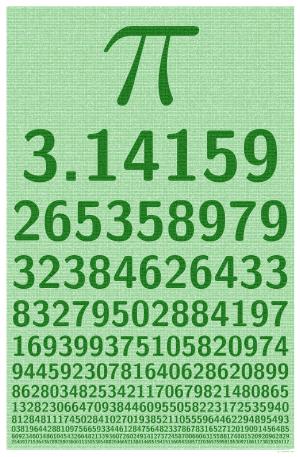
However, this post is about the most famous letter, Pi. It is most like the Roman letter P(although the English P is more like the Ancient Greek letter Φ, because there is a slight aspiration at the end). It is used in the Ancient Greek word παδιον, which means small child. Its most common usage is a symbol for any perfect circle's diameter divided by its circumference.
Since thousands of years ago people have tried to figure out what the definition of Pi is. Back then, they didn't know that it was an irrational number. Babylonians, who were great mathematicians, thought Pi was exactly 25/8 or 3.125. Archimedes has calculated that;
3.142857142857143... > π > 3.140845070422535...
Which means that the first three digits of Pi are 3.14. In the middle ages, there were special methods for calculating Pi, and Jamshīd al-Kāshī, a Persian mathematician, calculated 17 digits.
The longest expansion of Pi before the computer was in 1873, when William Shanks spent over 20 years calculating 707 digits of Pi, although only 527 were correct.
In 1989 Pi was calculated to 1 billion decimal places by the supercomputer IBM 3090 using an infinite series.
The record is 13.3 trillion decimal places, calculated on the 8th of October, 2014.
Monday, 19 January 2015
An apology
Many followers of the "Lyra's Letters" blog may have noticed that the bloggers have not been very productive in the past few months compared to the months of May, June, and July.
This is because the most productive writers on the blog have been occupied with other things the past few months, such as on-line courses and, in the case of August, vacations.
This has also been due to the fact that the writers are writing longer posts than what was usual in June. Remember that we are are still a very productive team, writing on average a post per week, with hopefully as many as seventy posts submitted before the Lyra's Letters first anniversary. That is tens or even hundreds of thousands of words squeezed into seventy articles, some of which being many pages long.
For people who are new to the blog, you can read about its name in the article "Lyra".
This is because the most productive writers on the blog have been occupied with other things the past few months, such as on-line courses and, in the case of August, vacations.
This has also been due to the fact that the writers are writing longer posts than what was usual in June. Remember that we are are still a very productive team, writing on average a post per week, with hopefully as many as seventy posts submitted before the Lyra's Letters first anniversary. That is tens or even hundreds of thousands of words squeezed into seventy articles, some of which being many pages long.
For people who are new to the blog, you can read about its name in the article "Lyra".
Friday, 9 January 2015
Beaches on the Coast
The area in Australia that I live in is called the Central Coast. It is all of the small towns in between Sydney and Newcastle. It is a beautiful area, where there are many types of birds that stay there or migrate through. There are many hiking trails too, but the most fun thing in the area is the beaches.
Umina- The beach that is the closest to my house is called Umina beach. There is a playground there with a kiosk where I can sometimes get ice cream. I have been there many times. At any one day, the waves can be from tiny and breaking only at the shore to 2 meters high and sending up a huge spray of foam when they break. At the Southern half of the beach is an area where dogs are allowed. Lyra is walked there sometimes. At the South end there is a small rocky path that goes to Pearl beach.
Pearl- Pearl beach has the same waves all of the time- big, but they only break right on top of the shore. They seem to go farther in certain places, so the shoreline is kind of wiggly. It is not such a good place to swim because it is too dangerous, however a walk along the beach can be nice.
Ocean- Ocean beach is technically the Northern half of Umina beach. North of it lies Ettalong beach. All three are in a bay, which is why they have calmer waves than Terrigal and Avoca.
Terrigal- This beach has huge, dramatic waves. At my best guess they can be up to 4 meters high! Because of this, it is my favourite beach.
Avoca- Avoca beach is very big and long. Its waves are almost as big as the ones at Terrigal, but they can be powerful too. They can also be hard to catch in body surfing.
I love doing water activities at these beaches. It has been a great hobby ever since I moved to Australia.
 |
| Umina beach with Lyra in the foreground |
Umina- The beach that is the closest to my house is called Umina beach. There is a playground there with a kiosk where I can sometimes get ice cream. I have been there many times. At any one day, the waves can be from tiny and breaking only at the shore to 2 meters high and sending up a huge spray of foam when they break. At the Southern half of the beach is an area where dogs are allowed. Lyra is walked there sometimes. At the South end there is a small rocky path that goes to Pearl beach.
 | |
| Me, my brothers, and a friend viewing Pearl Beach |
Pearl- Pearl beach has the same waves all of the time- big, but they only break right on top of the shore. They seem to go farther in certain places, so the shoreline is kind of wiggly. It is not such a good place to swim because it is too dangerous, however a walk along the beach can be nice.
Ocean- Ocean beach is technically the Northern half of Umina beach. North of it lies Ettalong beach. All three are in a bay, which is why they have calmer waves than Terrigal and Avoca.
Terrigal- This beach has huge, dramatic waves. At my best guess they can be up to 4 meters high! Because of this, it is my favourite beach.
Avoca- Avoca beach is very big and long. Its waves are almost as big as the ones at Terrigal, but they can be powerful too. They can also be hard to catch in body surfing.
I love doing water activities at these beaches. It has been a great hobby ever since I moved to Australia.
Sunday, 4 January 2015
The future
What will the future be like? Many people imagine a land full of gigantic, futuristic cities built in the air, where everybody drives flying cars, where the problems of war and poverty and global warming have been solved, where we can control the weather, and where we do not have to do anything.
All of these developments, however, are very unlikely to be made in the future. These thoughts came mainly from old movies. This is why none of that is very likely to be what the future will look like:
Land full of gigantic, futuristic cities
Most cities are very unlikely to grow much larger than they already are, and that is because the population is falling in Japan, China, and most of Europe. The birth rate is falling from 2.5 in Australia, the entire Americas, and most of Asia. The only continent with a steadily increasing population left is Africa, and its population will just start to drop by 2050. As for futuristic? Most buildings people are making are still stacks of little boxes. The buildings may become more beautiful later, but the old buildings are still much nicer than the new ones.
Built in the air
How the heck could you elevate cities in the air? I think there is a way, but it would be very expensive. It would be easier to make cities that orbit around the earth in space, or are built on the moon.
Where everybody drives...
Nobody will have to drive anything in the future, not even in the near future. Cars that drive themselves are already being used. A problem is, a car that drives itself would be very expensive. A solution to the the problem is taxis that drive themselves. Wouldn't that be great! No parking lots and narrower lanes would mean there would be room for other things, such as parks, cycleways (People may be biking more in the future!) and buildings.
...Flying cars
Why need a flying car when small airplanes are much better? It should be "airplanes that drive on roads."
Where the problems of war and poverty and global warming have been solved
It may sound depressing, but there has always been a problem with the world, and there will always be.
Where we can control the weather
The weather is a very complex thing, and a terribly powerful one, too. It makes no sense to even think about controlling it for another two or three hundred years. And, when we finally do manage to control the clouds, imagine what a bad job we would do of it. Everybody always wants a blue sky and perfect heat, day after day. The plants would wither away. If we try and solve this problem and add rain, well, as I already mentioned, weather is a very complex thing. We would interfere with weather elsewhere, with more bad circumstances, and generate a negative spiral. The world would fall into chaos. Best to leave the weather untampered with.
The truth is that we are already controlling the weather, and the weather is on a due course for chaos in fifty years if nobody does anything quickly. How can we manage the world with much more power?
And where we do not have to do anything
All mechanical jobs will be replaced by robots, but most other jobs will not. For example, a robot can tell somebody information, but I do not think a robot would be a good teacher. People will still do science. Tours will not be taken over by robots, and that is good for me because I want to be a tour guide when I grow up. Robots are good for many other jobs, though, so watch out if you plan to work in a car factory!
The path of history has been a long, windy route, and there have been significant bends in the route, first at the beginning of agriculture, next in the discovery of bronze, then iron. The most recent bend has been the sharpest, at the beginning of the Industrial Revolution. There have been large forks in the path since, including the world wars and the cold war. At both forks, we went the right way. I wonder: Why, since the industrial revolution, have we been constantly in the fear of the world being destroyed? Anyway, the next fork in the path is very important. In World War II, it was not so extreme. Hitler was about to take over half the world, but, if he had succeeded, there would be more war that would rip the empire apart, so the only change would be in country borders. Even in the Cold War, it was not so extreme. This time, there will be a change in the way we live, no matter what we do. The problem is climate change.
The good news is, we are on the right path, if only we are given a nudge the right way. In future problems, we might not be so lucky. Along with more control over the earth, will come worse problems with more dire conditions if we go the wrong way. Mark my words, humans will destroy themselves sooner or later, if this row of problems continues. However, there is nothing one person can do, so the best thing to do for now about this is nothing. All we can do right now is avoid the problems that come in our way. Currently, this happens to be climate change, which should be one of the easier problems to solve, because we are causing it ourselves.
All of these developments, however, are very unlikely to be made in the future. These thoughts came mainly from old movies. This is why none of that is very likely to be what the future will look like:
Land full of gigantic, futuristic cities
Most cities are very unlikely to grow much larger than they already are, and that is because the population is falling in Japan, China, and most of Europe. The birth rate is falling from 2.5 in Australia, the entire Americas, and most of Asia. The only continent with a steadily increasing population left is Africa, and its population will just start to drop by 2050. As for futuristic? Most buildings people are making are still stacks of little boxes. The buildings may become more beautiful later, but the old buildings are still much nicer than the new ones.
Built in the air
How the heck could you elevate cities in the air? I think there is a way, but it would be very expensive. It would be easier to make cities that orbit around the earth in space, or are built on the moon.
Where everybody drives...
Nobody will have to drive anything in the future, not even in the near future. Cars that drive themselves are already being used. A problem is, a car that drives itself would be very expensive. A solution to the the problem is taxis that drive themselves. Wouldn't that be great! No parking lots and narrower lanes would mean there would be room for other things, such as parks, cycleways (People may be biking more in the future!) and buildings.
...Flying cars
Why need a flying car when small airplanes are much better? It should be "airplanes that drive on roads."
Where the problems of war and poverty and global warming have been solved
It may sound depressing, but there has always been a problem with the world, and there will always be.
Where we can control the weather
The weather is a very complex thing, and a terribly powerful one, too. It makes no sense to even think about controlling it for another two or three hundred years. And, when we finally do manage to control the clouds, imagine what a bad job we would do of it. Everybody always wants a blue sky and perfect heat, day after day. The plants would wither away. If we try and solve this problem and add rain, well, as I already mentioned, weather is a very complex thing. We would interfere with weather elsewhere, with more bad circumstances, and generate a negative spiral. The world would fall into chaos. Best to leave the weather untampered with.
The truth is that we are already controlling the weather, and the weather is on a due course for chaos in fifty years if nobody does anything quickly. How can we manage the world with much more power?
And where we do not have to do anything
All mechanical jobs will be replaced by robots, but most other jobs will not. For example, a robot can tell somebody information, but I do not think a robot would be a good teacher. People will still do science. Tours will not be taken over by robots, and that is good for me because I want to be a tour guide when I grow up. Robots are good for many other jobs, though, so watch out if you plan to work in a car factory!
The path of history has been a long, windy route, and there have been significant bends in the route, first at the beginning of agriculture, next in the discovery of bronze, then iron. The most recent bend has been the sharpest, at the beginning of the Industrial Revolution. There have been large forks in the path since, including the world wars and the cold war. At both forks, we went the right way. I wonder: Why, since the industrial revolution, have we been constantly in the fear of the world being destroyed? Anyway, the next fork in the path is very important. In World War II, it was not so extreme. Hitler was about to take over half the world, but, if he had succeeded, there would be more war that would rip the empire apart, so the only change would be in country borders. Even in the Cold War, it was not so extreme. This time, there will be a change in the way we live, no matter what we do. The problem is climate change.
The good news is, we are on the right path, if only we are given a nudge the right way. In future problems, we might not be so lucky. Along with more control over the earth, will come worse problems with more dire conditions if we go the wrong way. Mark my words, humans will destroy themselves sooner or later, if this row of problems continues. However, there is nothing one person can do, so the best thing to do for now about this is nothing. All we can do right now is avoid the problems that come in our way. Currently, this happens to be climate change, which should be one of the easier problems to solve, because we are causing it ourselves.
Friday, 2 January 2015
2015
Happy new year!
New years is celebrated in different ways all over the world, as you can see in Daniel's earlier post. It is normally celebrated with a fireworks show and a countdown in between December and January at midnight.
Technically, midnight is the opposite of noon, so it is the time that the sun is on the other side of the world. A time like that doesn't seem so important, and that is why my family celebrated the 2014 new year at sunrise.
December is the last month of the year, in which Christmas, Hanukkah, and Kwanzaa are celebrated. Thus December is the most festive time of the year and creates a special feeling for celebrating new year's eve.
Because new year officially starts on 12:00:00 PM, it gets pretty tense at that time. This is why a countdown accompanies most firework shows. There is a huge countdown on a lights display on the Sydney Harbour Bridge. There is a famous ball drop at New York.
New years is probably the least religious holiday. Christmas is Christian in origin and every other holiday has its roots in some culture. Babylonian, Celtic, more Christian holidays, and so on. New years is based on a time at the height of winter(or summer) and celebrates every new year, or every circulation the earth makes around the sun.
This holiday leads into the first month of the year:January. It is named after the Roman god Janus, who has two faces, one for looking forward, another for looking back. The name of this month symbolises how people look back on the old year and remember how it went while looking forward at the new year with hope.
One thing I won't get into in this post is the tradition to think of new years resolutions and forget them overnight.
Think about how you feel when you see the following word. Wait for it...
2014.
That year has just passed. You must remember a lot from it.
Every January, the Gensemer family writes a 'Dear friends' letter that we e-mail to our friends and post on Facebook. It contains what each of us has done the past year.
This is the second word...
2015.
Yep, that is this year. The international year of light and light-based technologies. There is a whole year ahead of us. A little less than 365.25 days, to be exact.
New years is celebrated in different ways all over the world, as you can see in Daniel's earlier post. It is normally celebrated with a fireworks show and a countdown in between December and January at midnight.
Technically, midnight is the opposite of noon, so it is the time that the sun is on the other side of the world. A time like that doesn't seem so important, and that is why my family celebrated the 2014 new year at sunrise.
December is the last month of the year, in which Christmas, Hanukkah, and Kwanzaa are celebrated. Thus December is the most festive time of the year and creates a special feeling for celebrating new year's eve.
Because new year officially starts on 12:00:00 PM, it gets pretty tense at that time. This is why a countdown accompanies most firework shows. There is a huge countdown on a lights display on the Sydney Harbour Bridge. There is a famous ball drop at New York.
New years is probably the least religious holiday. Christmas is Christian in origin and every other holiday has its roots in some culture. Babylonian, Celtic, more Christian holidays, and so on. New years is based on a time at the height of winter(or summer) and celebrates every new year, or every circulation the earth makes around the sun.
This holiday leads into the first month of the year:January. It is named after the Roman god Janus, who has two faces, one for looking forward, another for looking back. The name of this month symbolises how people look back on the old year and remember how it went while looking forward at the new year with hope.
One thing I won't get into in this post is the tradition to think of new years resolutions and forget them overnight.
Think about how you feel when you see the following word. Wait for it...
2014.
That year has just passed. You must remember a lot from it.
Every January, the Gensemer family writes a 'Dear friends' letter that we e-mail to our friends and post on Facebook. It contains what each of us has done the past year.
This is the second word...
2015.
Yep, that is this year. The international year of light and light-based technologies. There is a whole year ahead of us. A little less than 365.25 days, to be exact.
Subscribe to:
Posts (Atom)