Tuesday, 29 July 2014

Black Saturday

 On December 2008, a drought started in the Australian state of Victoria. The drought lasted throughout December and into January on the next year. On February 7 2009, temperatures soared.
Many fires were ignited. The firefighters hoped for a cool breeze from the ocean. It came that afternoon, but instead of helping the firefighters, it fanned the flames and made fires spread at running speed under 120 kph winds. Fires jumped containment lines and spotting occurred over 30 kilometres ahead of the main fronts.

One particular fire, a fire that started east of Kilmore, killed 120 people and engulfed three towns.
In another place a firefighter was killed when a burnt out tree fell on top of him. Firefighters from all over Australia, New Zealand and the USA came to help stop the fires. The fires were so ferocious that some of them continued deep into March.

What caused these fires? Many fires were created when power lines failed in high winds. Some fires were carefully controlled burns that had gone out of control and one fire could have been started by a cigarette butt. Some other fires may have been caused by arsonists. A man was arrested when residents saw him start a grass fire.

By the time all the fires had stopped burning, 1.1 million acres were burnt. Many roads were closed and the town of Marysville was completely destroyed. The town is still in the process of recovery. Smaller towns, like Kinglake, were also destroyed.

After the fires, Victoria slowly recovered. The hundreds of local businesses destroyed were replaced. Building codes changed and fire plans were made. Many of the towns, however, never came back to what they used to be. On 14 March 2009, the last fire was extinguished. The fires would be something most of the survivors would never forget.

Wednesday, 23 July 2014

Top 5 favourite books


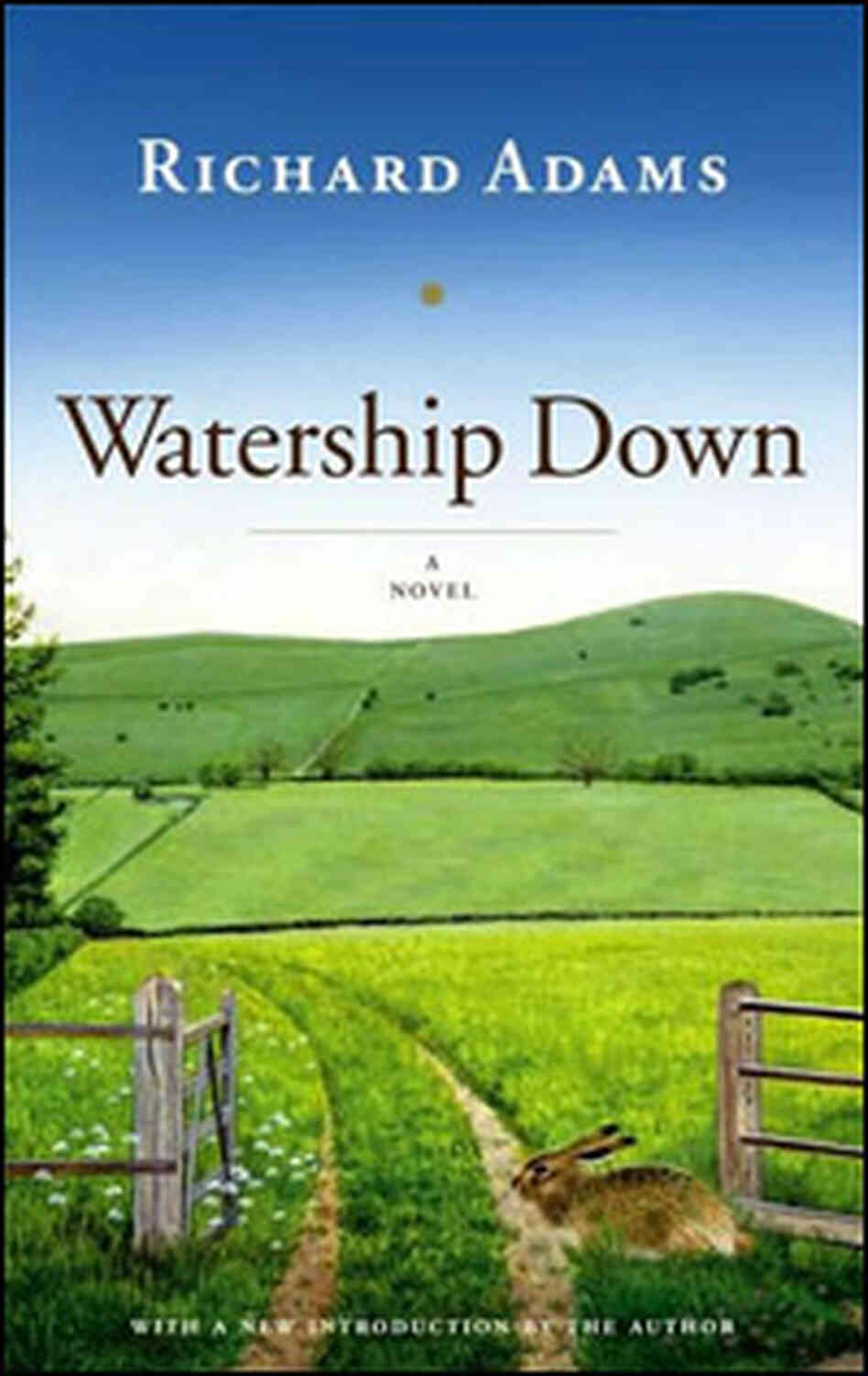
1.Watership Down by Richard Adams

    This book can be classified as animal fantasy. It has a real setting and real places in England.
    The characters are rabbits. The story is that two young rabbits, named hazel and fiver, escape their warren when it is destroyed.
    The rabbits speak in a language called Lapine, so you might have to check some words in a glossary at the end. They also tell each other stories about El-ahrairah, who is a character of their mythology. I think these things make the book very creative.
    Even though it is about rabbits, I think it might only be suitable for ages 10+. They fight sometimes and there are some gruesome descriptions.
    What I like most about Watership Down is the beautiful descriptions. In one part there is a few pages describing the moon shining on the forest. I also like it because the main characters are animals. It is my favourite book.


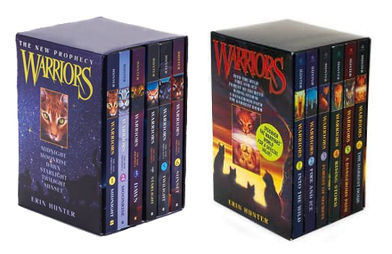
2.Warriors by Erin Hunter

    If you want to read all of the books in this series, well maybe you can't! Warriors is about twenty-six books long(and growing rapidly), if you don't count all the exclusives!
    This can also be classified as animal fantasy. The main characters are feral cats and they live in four different clans- Thunderclan, Windclan, Riverclan, and Shadowclan. Each clan has its own warriors, leader, and medicine cat and it is set in the forest, where they hunt, fight with each other, and gather once every month.
    They believe in another clan, called Starclan, where the cats go when they die. Starclan is actually real in the books, giving the clans prophecies and omens.
    In the first book, Into the wild, after Thunderclan is outnumbered and beaten at a battle with Riverclan, the Thunderclan medicine cat, Spottedleaf, gets a prophecy from Starclan that "fire will save the clan". The clan leader, Bluestar, says that it is impossible and doesn't believe it. Will the prophecy become true?
    I think Warriors is fun to read and pretty much limitless, so I can read as much as I want without having to read the same thing. One of the cons of this series is that there are a lot of characters and this can make things confusing. The pros are that it stays exciting and that you can start on any of the five series.


3.The trials of life by David Attenborough

    This book was written at the same time a TV series has been made. It is the third book from a trilogy that also includes Life on earth and the Living planet.
    Life on earth is about the origins of life, how animals evolved into what they are today. The Living planet is about evolution and how certain animals developed different features. The Trials of life is about animal behaviour. The whole thing is called the Life series.
    The Trials of life shows a lot of interesting facts told in an interesting way. Did you know that a type of bird uses sonar?
    It has 12 chapters about the different stages of life and the different activities useful in life for an animal, i.e. courting, finding the way, growing up, etc.
    I haven't read all of the book yet but so far my favourite part is a description of how army ants make their way through the rainforest in a swarming line and make their spherical camps not out of wood or dirt, but themselves, jammed in between two tree branches or under a rotting log.
    It is my favourite nonfiction book.


4.James Herriot's dog stories by James Wight, known as James Herriot

    James Herriot is a veterinary surgeon and he writes about his life in the Yorkshire dales. He has written many books, including a series of four books named after the lines of the first verse of a hymn called All things bright and beautiful. It goes like this:

All things bright and beautiful,
All creatures great and small,
All things wise and wonderful,
The Lord God made them all.

    James Herriot's dog stories is a collection from these four books. It has fifty chapters and they are all about dogs. James Herriot writes about other animals too. He has written about a voyage with a cargo of expensive sheep, and about cows and lambs. he has also written another collection called James Herriot's cat stories.
    A very sad story is when a dog named Amber, who has a beautiful shiny coat, gets a severe case of mange. I have also read a story called Only One Woof, about a sheepdog who never barks, not even once.
    In this book, there are all kinds of stories. They have good endings and bad endings, and a huge range of difficulties that the animals have, from a bad habit of chasing car tires to a dislocated hip. And they are all about a British country vet and his experience with dogs.


5.The way we work by David Maculay

    Written by the author of The new way things work, The way we work has interesting(and usually funny) pictures and understandable text that lets you know how the human body works.
     I used to have strong interests in things. One time, I was interested in the human body, so I got this book for Christmas.
    It covers everything about the human body from chemistry on the atomic scale to how organs like the stomach work. My favourite part is the page about the way signals travel along the spinal cord.
    As you can see on the cover, the illustrator is pretty imaginative. There are eye-catching pictures drawn of the different parts of the body and also arrows to represent signals or movement. This book is a perfect suggestion for anyone who wants to know how the human body works.

    Those are my top 5 favourite books. I hope you try some of them!

Sunday, 20 July 2014

What to do with a paper and pencil

A thousand years ago, the English language was very different from what it is today. The language was so different that you would never be able to understand it.

Around 1500 or so, the language evolved to be rather close to the English of today. Then it stopped changing abruptly. Why? It could have been due to a rise in population; Language changes more quickly if there are less people to speak it. But, no. Historical records suggest that the population was rising by the same amount throughout the Medieval times.

At this time, writing got a whole lot more popular. There were many historical pieces of writing written. A hundred and fifty years later, historians know so much about the Great fire in London because people wrote so much about it.

Now writing is commonplace in our society and appears in everything from newspapers to websites, from forms to roadside signs. This post has been published to introduce some basic writing tips for a fiction book.

For writing, possibly the best thing to have is experience, not only in writing but in reading. If an author of a fiction book reads only a few books, their work usually ends up almost as an exact copy of a bestseller.

 
Another important tip: If writing a book feels like work, then stop writing. If you are writing the right thing, the book simply writes itself.

Imagination is very important even in nonfiction books. Imagination can come from reading a lot, knowing a lot of facts, and other sources as well. Inspiration for a story can range from finding out an interesting fact to seeing a strange bird.

Inspiration can also come straight from imagination. For example, what would happen if somebody travelled to the future or to the past? Many books and movies have been inspired like this.

If you want people to read your story from cover to cover, make an interesting title. Even though people know you should never judge a book by its cover, they still tend to pick up books with interesting titles. You should also make an interesting start to the story. I don't know how many books there are I have only read the start of.

All great stories have a similar structure. The start is when all the main characters are introduced. The problem should be introduced as quickly as possible.

After this, there is a series of events. The events can be introductions of more problems, or can be normal events. All events build up to and contribute in a way to the climax, the most exiting point. The solution to the problem is in the climax. After the climax, action diminishes. There is the conclusion, and then the big ending.

I hope these tips will prove helpful. Good luck!


Monday, 14 July 2014

Being a writer

    Sometime a few years ago, I wrote my first story.
    It was not very long, not very imaginative, and, I admit, not very good. It never got published on the web.
    A while later, I frowned upon that earlier story and started writing another one. I called it Lymphocyte and it was the story of a white blood cell, but I didn't like that one either and I never wrote or published more than the first chapter.
    After a long time, I got inspired by the book series Deltora Quest by Emily Rodda and wrote another story, the Diary. Again, I didn't write or publish more than the first chapter.
    Soon, I thought of a landscape that I saw in a dream. I got an idea for a story and if I had written more than the first chapter it would have turned into a mess.
    So these are four stories that I started on but didn't finish. What made me stop writing them? I think that I just didn't like what I had and what I planned ahead. None of these stories were perfect for me.
    Sometime more recently, I started birdwatching after I moved to the Central Coast. I wouldn't consider myself a birdwatcher, but in the Central Coast It's impossible to resist! There are all kinds of birds!
    One thing that any birdwatcher notices is their behaviour. I have seen kookaburras fly away from their perches for seemingly no reason and ground-swallows(the name of a type of Australian swallow) fly close to the ground in open fields at only a few times of day.
    So I got inspiration for a story called The Battle In The Hills, which I posted on Lyra's Letters. It is the first complete story I ever wrote and I was sticking mostly to the idea. This shows that all you need to write a fiction story is a little inspiration.
    And as I write another story that I will put in Lyra's Letters, I don't have to do a lot of work, because the story is writing itself.

Sunday, 13 July 2014

Lyra

    This article is about my dog, Lyra. Her name is used in the name of this blog.

Lyra sitting on the couch.

    Lyra is not a name from my imagination. It is used as the name of the Girl in the His Dark Materials trilogy by Philip Pullman, named Lyra Belacqua, and for a small constellation shaped in an instrument called a lyre. Vega, the fifth brightest star in the sky and a corner of the summer triangle, is one of the stars in the Lyra constellation. Vega is also called Alpha Lyrae or Alpha Lyra.
    My family named our dog after both. Her birthday is at the 24th of October so she is now 20 dog years old(a dog year is 1/7 of a year, or 52 days).
    Her breed is a Flat-coated Retriever. They are dogs the size of a Labrador. They have a shiny coat with feathering on the belly, tail, and ears and the coat is usually black but can be brown or even yellow.
    I think Flat-coated retrievers are cute because of their rounded paws and floppy ears. She sticks them out to the sides sometimes and it makes me laugh. Probably any dog owner would say so, but I think my dog is cute and beautiful.
    Lyra does funny things too. Sometimes she groans and paws around in her sleep because she is having a dream. If someone throws a ball at her and she doesn't catch it the ball will bounce off of her jaw or go somewhere else and she would scramble around crazily trying to get the ball.
    Flat-coats were bred in England, like many other breeds. Some breeds of dogs are called gun dogs because they are good at scenting and retrieving, and flat-coats are listed as gun dogs.
    This breed, before it was established, was used by gamekeepers because of its incredible scenting ability. When the breed was officially recognised, numbers of Flat-coats grew much higher. However, the Golden Retreiver was bred alongside it, and that got so much more popular that by the end of World War II there were so few Flat-coated Retreivers that the breed was almost extinct. Beginning in the 1960's, they gained more popularity as a companion pet and the Flat-coated Retreiver was re-established.
    Most types of dogs don't like water. But Lyra likes breaking the rules and chasing ducks in the creek. And she didn't mind when she had fleas and we had to hose her down with some special shampoo. She loves water.
    Well, her sister hates water. so maybe not all Flat-coats love it.
    Her favourite game is tug-of-war. And she is so strong that she actually breaks her toys. So she has to use the toys lying around the house.
    There are a lot more things I can say about Lyra, but I don't want this post getting too long, so I'll just say that she's a good, friendly companion and that I love her.

Friday, 4 July 2014

Celebrating independence day

    The Declaration of independence was written on July 4, 1776. That was exactly 238 years ago!
    Independence day, also known as the fourth of July, is an American holiday celebrating the day that Thomas Jefferson wrote the declaration of independence.
    Congress made the decision to declare the thirteen colonies of America separate from the British Empire on July 2. Two days later it was written, but some historians say that it was signed almost a month later, on August 2.
    The signatures on the bottom include the names of John Hancock, President of the Congress at the time. There are also the names of Thomas Jefferson, Benjamin Franklin, and John Adams.
    Here is the opening part of the declaration:

IN CONGRESSJULY 4, 1776.
The unanimous Declaration of the thirteen united States of America

     After this declaration was signed, the United States of America became an independent country. And to the present day there are 37 more states, a total of fifty.
    This is the beginning of The Declaration of Independence...

When in the Course of human events, it becomes necessary for one people to dissolve the political bands which have connected them with another, and to assume among the powers of the earth, the separate and equal station to which the Laws of Nature and of Nature's God entitle them, a decent respect to the opinions of mankind requires that they should declare the causes which impel them to the separation.

    Then, the most famous sentence,

We hold these truths to be self-evident, that all men are created equal, that they are endowed by their Creator with certain unalienable Rights, that among these are Life, Liberty and the pursuit of Happiness.

   After that is a philosophy about how the government 'Harms natural rights'[1] and the main part, which is about the rights of America.
    The end is about how the country should be independent from the British Empire, and then a conclusion, which ends like this,

...And for the support of this Declaration, with a firm reliance on the protection of divine Providence, we mutually pledge to each other our Lives, our Fortunes and our sacred Honor.


[1]. Wikepidea, 'United States Declaration of Independence'