Monday, 18 April 2016

The Adventures of Gold


The Adventures of Gold


Gold was inside his shop, making magic wands like he always did on sunday afternoons.
However, it was not a Sunday afternoon. It was Friday morning. Normally, he would be in some important government meeting, but not today. Today he got the day off. But why did Gold make wands to sell at his shop during free time? Surely not money! He was the richest and most famous dragon in Great Britain! He did it purely for fun. Suddenly the doorbell rang.

“Come in!” yelled Gold. The door creaked open. Suddenly, a young cat burst through the
doorway so fast, he broke one of Gold’s Ming vases into a million pieces.

“Gold! You’ve got to hear this!” he said.

“But my Ming vase!” Said Gold.

“Come on!” Said the cat. “Your Ming vases come from Squeaky-E-Mart and cost ten cents! This is more important!”

“But…” said Gold.

“Listen to me!” said the cat. “The candy factory shut down!”

Gold froze in place. Even though he was middle aged, his longing for candy was stronger
than ever.

“Why did the owners shut it down?” said Gold.

“They didn’t.” said the cat. “The Vipers did”

“Who are the vipers?” said Gold.

“The vipers?” said the cat. “The Vipers are a famous gang of bulldogs. They have done worse and worse things over the past few years. yesterday they blew up a bridge.”

“But how do you know that the Vipers shut down the factory?” said Gold.

“I got a ransom note.” said the cat.

“May the King help us!” said Gold.

“I am the King.” said the cat.

“Oh. Right. Sorry.” said Gold. “Your hair style mislead me.”


“So how do we get them?” said the King.

“A crystal ball!” said Gold. He pulled an apple sized ball out of a cupboard.

“How does it work?” said the King.

“You say something into it and it takes you there!” said Gold.

“What makes it cloud up like that?” said the King.

“Cloudy apple juice.” said Gold. “The crystal ball only has one charge, so we have to use it wisely.”

“Go ahead.” said the King.

“Take us to the Vipers!” said Gold. Suddenly, in a whirlwind of colors, they got transported 
to a dingy old room with four bulldogs huddled around a table.

“Hands up!” said Gold. A bulldog spun around.

“What do you want?” said the Bulldog.

“Fix the candy factory!” said gold.

“We never shut it down.” said the Bulldog. “The ransom note was a lie!”


The next day, Gold was helping the King put the Vipers in jail, as well as whining his head off.

“I wasted a crystal ball, a train ticket a boat ticket, lots of time, and most importantly my 
ming vase, only to find that nothing happend at all!” said Gold.

“Not really.” said the King.

“What do you mean, ‘not really’?” said Gold. The King pulled a trophy out of his bag.

“As your King, I give you this award for helping me capture the most troublesome gang in Great Britain.” said the King.
                                                        The End!


Sunday, 17 April 2016

Hydrogen

 Hydrogen is the simplest and most abundant element on the periodic table. It consists of one proton and one electron. Its atomic number is 1 and its chemical symbol is H. Through this post I will write about its importance in the past, its fourth state of matter, and the inner beauty that it exhibits light-years away.
The Hindenburg disaster

Hydrogen was named after the two Greek words υδρο(hydro), meaning water, and γενης(genes), meaning creator, when it was discovered to create water when burned. In its pure state, hydrogen is a gas that is invisible and highly flammable. Because of its low density, hydrogen  is one of the two atomic elements that is lighter than air. this makes it able to float large objects. People took advantage of this fact by building blimps(zeppelins), aircraft that use the lifting power of hydrogen. They carried more than 35,000  passengers over the years from 1910 to 1914 without serious accident, but on 6 May 1937, the passenger airship Hindenburg mysteriously caught fire and crashed in New Jersey. From then on, hydrogen was considered far too flammable as a lifting gas.

As a gas, hydrogen is colourless, odourless and tasteless, yet we benefit from it every day. It is visible as a plasma in all stars, including our sun. The sun is mostly hydrogen that has been exposed to high temperatures or a strong electromagnetic field, converting it into plasma, the fourth state of matter. As a plasma, the hydrogen atoms are stripped of their electrons. This makes it possible to fuse hydrogen atoms together into helium, and to produce the intense amount of heat and light that is crucial for the Earth's ecosystem.

Hydrogen, like all other elements, has a dark side. The sun constantly emits positively and negatively charged hydrogen ions through interplanetary space. This is called solar wind. These particles can travel at up to one million miles per hour. Fortunately for us, Earth is protected by a magnetic field, which shields the planet from solar radiation. Were it not for this magnetic field, much of the Earth's atmosphere would have been stripped away by solar wind, rendering it lifeless.
The Ring nebula

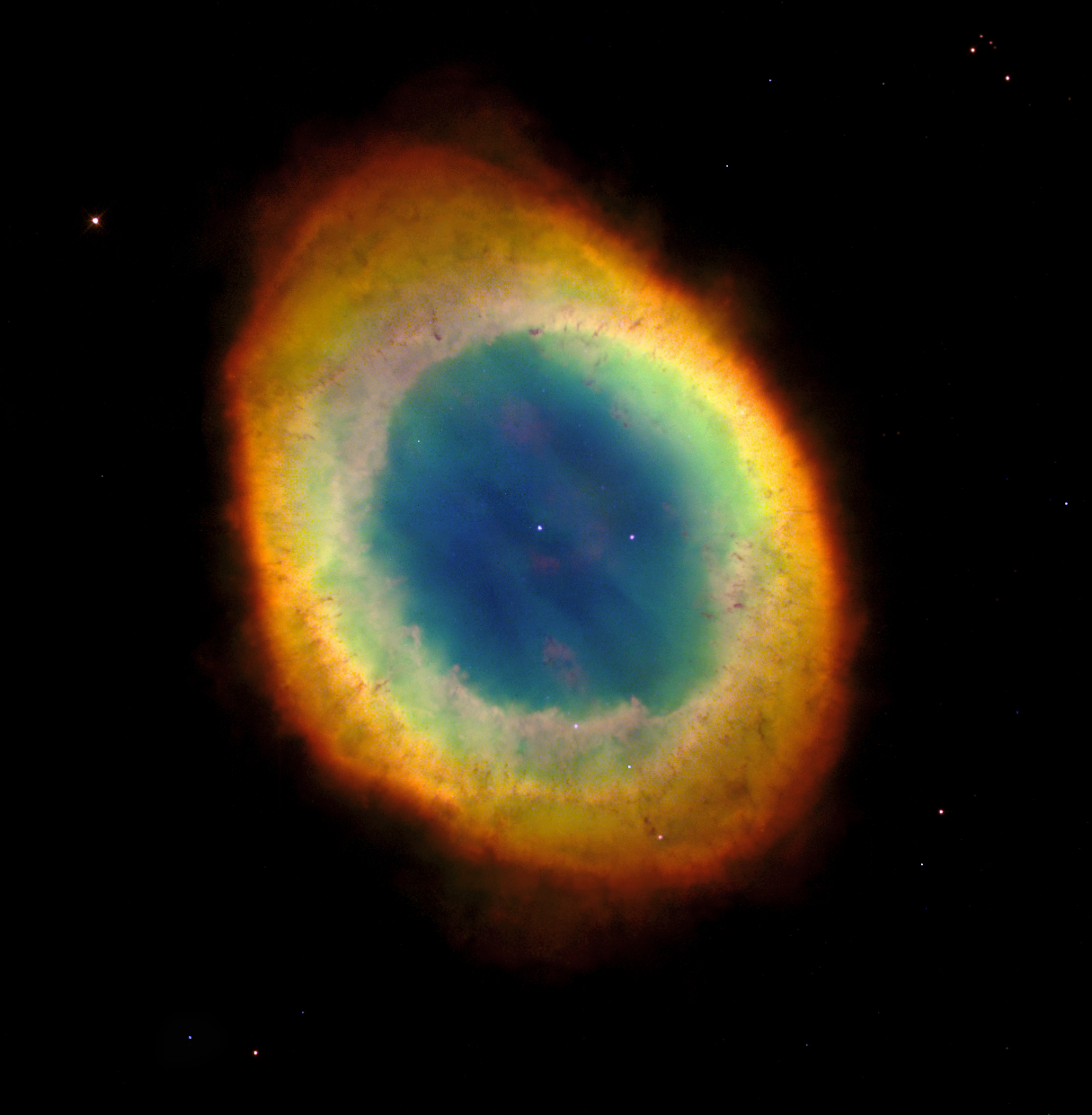
Hydrogen was first created by the big bang, roughly 13.7 billion years ago. Ninety percent of the universe consists of Hydrogen, which is mostly in stars and nebulae. Nebulae are mostly ionised hydrogen which glows in hydrogen's spectral emission lines. When I lived in a place with less light pollution, me and my family went outside with a telescope to look at the stars. One object that is visible in the Australian night sky is the Orion nebula, which appears as the middle 'star' in Orion's sword. My favourite nebula is the Ring nebula, which lies in the constellation Lyra.

Friday, 25 March 2016

Base systems


A base system is a system in which we count. Most people are familiar with the normal base-10 system, also called the decimal system. Each base system has its own unique set of numbers, like the decimal system, which has exactly ten.

The good thing about using a base system is that there does not have to be a different symbol for each number, which would be very confusing and hard to keep track of. Instead, the numbers count up through all of the symbols in the whole system, and then the system adds an extra digit and starts over again.

Computers have to bring this to the minimum, because an electrical current is either off or on. It is hard to get more information with simple digital devices, such as transistors, and it is hard to vary the current in any other easily detectable way. This results in only two "symbols" that a computer can use, so in counting, computers use the base-2 system, or the binary system.

Binary
The two 'symbols' in the binary system are usually represented by 0 and 1, and they are referred to as bits. These can combine to make long sequences that are used in computers. For example, whenever you press a letter on a standard keyboard, an eight-bit sequence of ones and zeroes gets sent to your computer.

Even though binary is simple, it also gets very long. All of the numbers from 0 to 10 in the decimal system can be represented as 0, 1, 10, 11, 100, 101, 110, 111, 1000, 1001 and 1010 in binary. All of the even numbers end with a zero, and there is a twos place, a fours place, an eighths place, a sixteenths place and so on. A computer byte, or eight digits of binary, can range through all of the numbers from 0 to 255. 109 in the decimal system is the same as 1101101 in binary.

Octal
The next counting system I want to focus on in this post is octal. This is the base-8 numeral system. Octal has been used by some of the native Americans for counting, because they counted on the spaces in between their fingers, and not the fingers themselves. Over history, octal has been proposed for many things such as coinage and counting, but in the present day, it is not widely used.

Octal uses only the digits 0-7. One helpful thing about the system, is that eight is the cube of two, or 2x2x2. This makes multiplication and division easier. The number 109 is represented by 155 in octal.

Decimal
The next system is also the most commonly used; the base-10 system, or the decimal system. We use the system only because we have ten fingers, so we have the decimal system solely due to evolution. If we had evolved with four fingers on each hand, we would be using octal!

The decimal system is very old. It was used by the ancient civilisations of Greece, Rome, Egypt and China. The oldest decimal multiplication table was made out of bamboo slips and came from the Warring States period in China. Romans had an interesting way to make decimal numbers, only needing numerals for 1(I), 5(V), 10(X), 50(L), 100(C), 500(D) and 1000(M). The Ancient Greeks did not use numerals, and instead used the letters Alpha-Theta as the numbers 1-9, Iota-Koppa as 10-90, and Rho-Sampi as 100-900. The number 148, for example, is translated as ρμη(RUE) in Greek(Notice that the Greek counting system includes the three letters Digamma, Koppa and Sampi, which are now obsolete in language). 109 in decimal is the same as the number 109. This example is not needed.

Duodecimal
One numeral system that is commonly used in America is the base-12 system, also called the duodecimal system or sometimes dozenal. This system is used today in foot-inch and single-dozen-gross-great gross systems as well as most clocks. You might sometimes refer to the number six as 'half a dozen', or twenty-four as 'two dozen'. In the duodecimal system, 24 translates to 20. The duodecimal system can be helpful because it is divisible by 2, 3, 4 and 6.

You may notice that in all of the systems I listed before, only numbers from the 0-9 set are used, however duodecimal has to count through all of the numbers 0-11 without adding another numeral place. This means that the system needs extra symbols to represent 10 and 11. These can be an inverted 2 for 10 and an inverted 3 for 11. The number that is 139 in the decimal system is the same as 37 in the duodecimal system.

Hexadecimal
The next numeral system is based on 2 raised to the fourth power: the hexadecimal system, or the base-16 system. This system requires sixteen different symbols, so the letters A-F are used for the numbers 10-15.

The hexadecimal system is highly involved in computer screens. Each pixel on the screen of a computer is made of three different lights, coloured red, green and blue. The brightness of each of these lights can be adjusted from 0(off) to 255(maximum brightness). This can vary the colours of each pixel. For example, red=255, green=128, blue=0 can colour a pixel bright orange. Each number in between 0 and 255 can be expressed as an eight-digit number in binary, or a two-digit number in hexadecimal. Six-digit series composed of hexadecimal numbers are used in HTML and other programs, two digits to represent each colour. In this form, bright orange would be #FF8000. 139 translated into hexadecimal would be 8B.

Vigesimal
The vigesimal system is the base-20 numeral system. It consists of the numbers 0-9 and the letters A-J. The letter J represents 19. It is used in the Mayan and Aztec language with its own symbols. This system is not all too different from the decimal system, because it is based on two times ten. 139 is 6J in vigesimal.

Sexagesimal
Sexagesimal is the last numeral system in this post. The extremely helpful thing about sexagesimal is that its base, the number 60, can be divided by 12 different factors including 1, 2, 3, 4, 5, 6, 10, 12, 15, 20, 30, and 60. It was used by the Babylonians, but I would not say that their counting system was completely base-60, because the Babylonians used decimal as a sub-base.

Of course, sexagesimal is still used today, in geographic coordinates(degrees, minutes and seconds), and time(hours, minutes and seconds). On clocks, the system fits together well with the duodecimal system, because exactly five minutes fits in between each hour. It is no wonder that this system, which was used by the Babylonians, is still used today!


Resources: Wikipedia, "List of numeral systems"
 

Monday, 22 February 2016

Movie of the year

If you are friends or family to the Gensemer family, you might have received our Dear Friends letter in early January. This letter includes events and experiences during the last year, described in accounts by each family member. Each family member also picked a book and movie of the year. This post is my review of each movie. I am also including the director of each movie and its rating on the Rotten Tomatoes website.


Arwin's(11 years) choice:

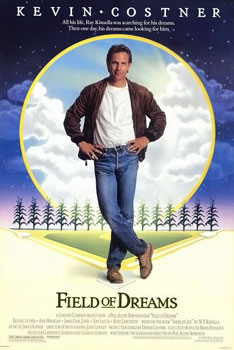
Field of dreams(1989), directed by Phil Alden Robinson.

This movie is about a corn farmer in Iowa, who gets notified by a strange voice that, "If you build it, he will come". The farmer later finds out that if he builds his own baseball field, the ghost of Shoeless Joe Jackson(who was banned from professional baseball in 1920 after the Black Sox scandal) will come and play baseball again. This movie also includes other famous baseball players.

Even though the movie is themed on baseball, it is also about magic and family togetherness, and has a good, warm feeling to it.

Rating: PG, due to "a bit of strong language".
Rotten Tomatoes ratings:
Tomatometer(critic ratings): 86%
Audience rating: 86%


Daniel's(13 years) choice:

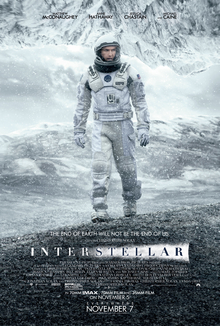
Interstellar(2014), directed by Christopher Nolan.

Wikipedia calls this "[An] epic science fiction film". It is set far in the future, when humans are at threat from natural disasters that are wiping out crops. The main character is Cooper, a former NASA pilot who runs a farm with his daughter, Murphy, and other relatives. Murphy believes that there is a "ghost" haunting her bedroom and pulling books out of the shelves. During a dust storm, Murphy's "ghost" forms lines and bumps in the dust. Cooper later finds out that the lines are caused by gravity and that they are a binary code for a set of geographic co-ordinates.

Some critics rate Interstellar three out of five stars because some of the dialogue is hard to comprehend, but I like it because it is exciting and includes many scientific theories about black holes, wormholes, space and time. It is probably the best science fiction movie I have ever watched.

Rating: PG-13, due to swearing.
Rotten Tomatoes ratings:
Tomatometer: 71%
Audience: 85%


Wytse's(13 years) choice:

Song of the Sea(2014), directed by Tomm Moore.

This is a hand-animated movie about Irish myth. It also includes Irish settings and music. The story starts at a small island off the coast of Ireland, which is the home of a lighthouse keeper named Conor. He lives with his son Ben and his wife, who mysteriously disappears and leaves him with Saorise, their newborn daughter. Six years later, Saorise can still not talk and she is constantly being teased by her brother Ben. She is then found washed up on the beach, by their visiting grandmother. Granny declares that living on the island is too dangerous for them and starts taking them to the city.

The thing I like most about this movie is not the plot, but the animation. The animation makes it a very colourful and flowing artwork. It also has interesting references to Irish mythology such as Mac Lir the giant, Selkies, and Faeries. I think it is a good family movie.

Rating: PG
Rotten Tomatoes ratings:
Tomatometer: 99%
Audience: 92%


Nynke's choice:

Never Cry Wolf(1983), directed by Caroll Ballard.

This is a true story, based on the autobiography of Farley Mowat. It starts when a biologist gets sent into the wilderness of Canada on a government project to discover why caribou populations have been decreasing. He also needs to find out if wolves have anything to do with the problem, even though no one has witnessed a wolf killing a caribou.

One thing I have to tell you about is that this story has a sad ending, however, it features many amazing natural landscapes, and information that the biologist finds out about the wolves. It also depicts wolves as social, friendly, and helpful as a part of nature, unlike savage and menacing, which is the common view of wolves.


Rating: PG, due to "a few gross scenes".
Rotten Tomatoes ratings:
Tomatometer: 100%
Audience: 85%


Stephen's choice:

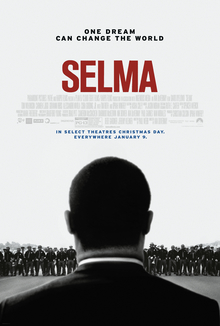
Selma(2015), directed by Ava DuVernay.

This movie is also a true story, a story about American history. It is about the Selma to Montgomery marches, a series of protest marches led by Martin Luther King, Jr., who is well known for having led many protests against racism and poverty. The Selma to Montgomery marches were part of the Voting Rights Act, an act that allowed black people to vote. They went along the 54-mile stretch of highway in between a small town in Alabama and the state's capital. The movie was based on F.B.I. accounts of these marches.

Rating: PG-13, due to violence.
Rotten Tomatoes ratings:
Tomatometer: 99%
Audience: 86%

Tuesday, 2 February 2016

The Tweed Volcano

You may not be surprised to know we've been busy in the holidays this summer (or, for our Northern Hemisphere friends, the winter). To start off, some friends visited over Christmas. Then we went off on a small trip to the Nightcap Range.

The Nightcap mountains are well known as being the home of the hippie town of Nimbin. Nimbin, closely linked to the coastal town of Byron Bay, is a big tourist attraction and a diversion from the colorless Pacific highway. We never visited it on the trip, but drove up a steep dirt road to a campsite within the range itself.

Nightcap Range is shaped like a C and is much wider than it is long. It gradually gains altitude from the Nimbin valley north, transitioning from hilly farmland to cliff-riddled rainforest. At around 800m of altitude, it slopes off in a dramatic and crazily steep escarpment to a coastal valley. Nightcap is just one ridge of many that make up one massive and perfect circle of mountains and cliffs known as the Tweed Volcano. Standing high in the centre of the crater, alone, is the imposing spire of gray rock known as Wollumbin.

Wollumbin, or Mount Warning as it was named by Captain Cook, is 1150 metres high (that is, from the summit to the valley floor, it measures over a kilometre). It is a remnant of the Tweed shield volcano, which used to be (and still is) so wide it could cover the state of Vermont. We only stayed on the eroded southern slope.

On the first day, we took the longest walk available in the area.

The walk began at the campsite, which appeared to be infested by goannas (or just one that seemed to be devoted to stalking me constantly). At arrival, I noticed signs of logging around the campsite, such as a stand of hoop pines lined up in rows, and a disused logger's cabin that was falling apart. I learned from information boards that logging had stopped here in the 1980s.

After having breakfast, we began walking down the creek. The path here wove through dense rainforest. Whenever the creek came in sight, it looked like a stagnant puddle. Soon the forest opened up, and the path clung to the creekside as it tumbled over rocks and wove through scrubby eucalypt forest. After forty minutes, the path ended at a lookout platform perched on the top of Minyon Falls.

Minyon Falls was where the creek we were following plunged into a broad gorge surrounded by tall, sheer cliffs. About four kilometres down the gorge, the walls opened up and the gorge joined a valley. We had to hike over there and back in order to reach the base of the falls. The first leg of the hike involved walking out and ascending to a point, with unfenced cliffs on both sides. The second leg was much more beautiful. We walked through beautiful rainforest dominated by massive strangler figs and swaying palm trees. Then we crossed a rocky creek, and ascended a debris field to the waterfall's plunge pool.

The waterfall was so high, it disappeared before reaching the bottom. I noticed outcrops of hexagonal rocks on the cliffs and down below. I had seen these peculiar rocks in other places, too.

The walk back up to the lookout, which travelled up the other side of the gorge, was much quicker and steeper. We reached the campsite in time for dinner.

Wollumbin is popular for being the first point in Australia, and every other mainland country except for Russia, to see the light of day. Wollumbin (Mount Warning) is one serious mountain, and is proof height does not equal hardness (so is Kosciuszko, but in a different way). The track to the summit is steep, zigzagging, and endless. Near the top is a seventy degree rock wall with a chain.

On the morning of the second day, we got up and hiked to the top.

The drive into the crater was pretty long, since we had to drive around the steep crater escarpment first, to a gap in the cliffs. From the gap we drove through some beautiful but very hilly farmland, and at long length reached the road that zigzagged up through Wollumbin's lesser satellites to a "carpark". The carpark itself, which we had the privilege to park in, was only about eight spaces and cars clung to the side of the road up to a kilometre away from the trailhead itself! (and we were there in the shoulder season).

Anyway, the walk began as a paved concrete path with no steps. As we climbed up through some beautiful woody rainforest, the path became brick. Then the path contoured upward. The path, which was dominated by steps this time, became a well-drained dirt path with wooden steps and information boards.

I had never before been on a pathway that was wheelchair accessible for the first 200 metres, and a near vertical climb in the last 200 metres, but that was what the path was like. Once we left the open rainforest and began climbing through what was basically a massive tangle of vines, the wide path degraded into a very rocky and muddy dirt trail with no steps. It stayed this way almost to the top. About 1200 metres up the track, we reached a massive clearing (with a view!) in the middle of which stood a helicopter platform. There were no less than four of these on the way to the top.

Half an hour later, when we reached Helicopter Landing Point 2, absolutely nothing had changed. We were still zigzagging steeply through a damp and muddy vine rainforest. We were 2.2 kilometres from the carpark this time. The views had gotten better, but they still weren't very impressive. Then, not far from the platform we reached a sign that announced our arrival at the halfway point. From there, the forest changed.

Earlier, we had been seeing coachwood trees and other rainforest plants. Now we began seeing eucalypts, and the forest just began to dry out. The track stopped zigzagging, and began to head consistently to the right. Soon the trail became a hard dirt trail, reinforced by rocks. In what seemed like no time, we reached helicopter point 3, which was 3.2 kilometres from the carpark and just 1.2 kilometres from the summit.

This place was the first real view. I could see out to the sea, but I could also see what was directly above us; a cliff of massive proportions. I had no idea how the path could get to the top of this.

Although the trail kept on zigzagging up, it never really reached the cliff. Maybe we were slowly circling the mountain the whole time.  Anyway, helicopter point 4 was in a large grove of spear lilies, found nowhere on Earth but a small collection of high mountains around the NSW-QLD borders. It was a scarce 300 metres from the top, and a mind blowing 4 kilometres' walking from the trailhead.

For about five minutes, we walked through an ancient mountain forest filled with mossy Antarctic beech. The forest ended finally when the track stopped dead by a picnic table, at the base of the cliff I had seen earlier. The track seemed to go straight up this cliff. The climbing had begun.

At close inspection, the cliff had plenty of holds and I could almost walk up it. Soon enough, we arrived at the summit. There was no one view, but five separate view platforms ringed the summit. I could easily see the whole crater. It was great summiting.

The trip back down the mountain was uneventful. I went to sleep happy.

On the third day, we ventured to the coast and Byron Bay. I visited the lighthouse viewpoint, and walked to the easternmost point in Australia. We stopped at a lookout in Ballina, a nearby town.

Sunday, 20 December 2015

An Australian christmas

Ever since we moved, it has been hard to get in the Christmas spirit. Because of the difference of seasons and weather from the Northern hemisphere, Australians celebrate Christmas in a much different way from Americans.

As an example, these are the Australian lyrics for 'Jingle Bells'. There are notes below to explain some of the different lines. The lyrics also include some Australian words and terms.

Dashing through the bush
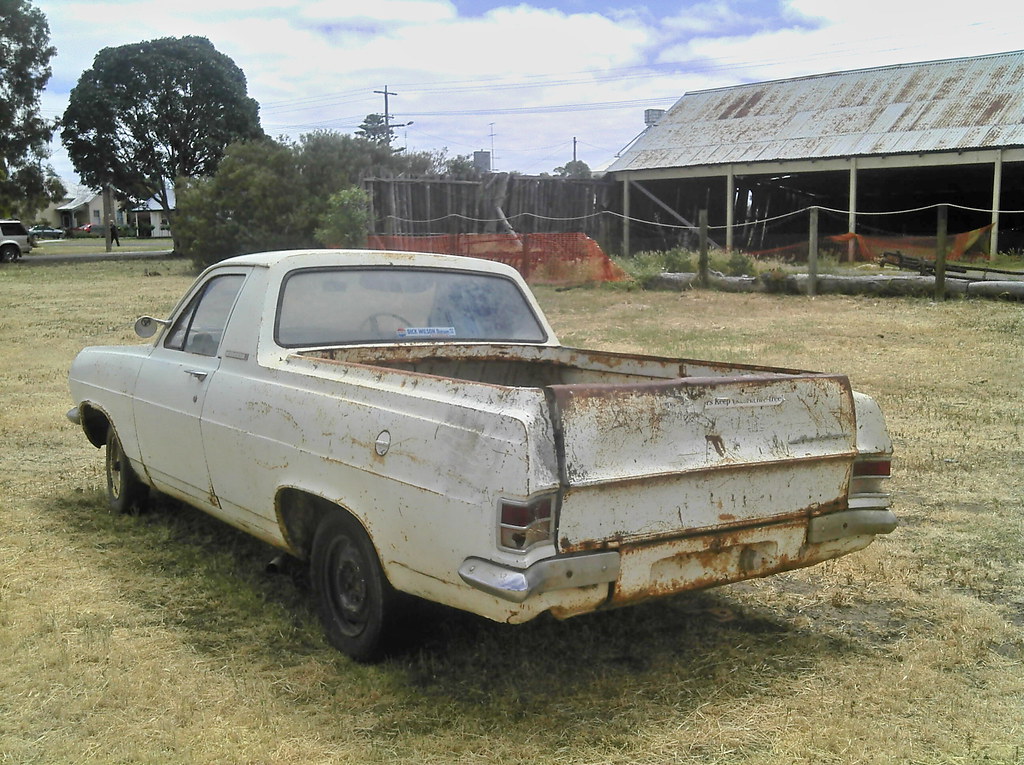
In a rusty Holden Ute
Kicking up the dust
Esky in the boot
Kelpie by my side
Singing Christmas songs
It's Summer time and I am in
My singlet, shorts and thongs

(chorus:)

Oh! Jingle Bells, Jingle Bells
Jingle all the way
Christmas in Australia
On a scorching summer's day
Jingle Bells, Jingle Bells
Christmas time is beaut
Oh what fun it is to ride
In a rusty Holden Ute.


Engine's getting hot
We dodge the kangaroos
The swaggie climbs aboard
He is welcome too
All the family's there
Sitting by the pool
Christmas day, the Aussie way
By the barbecue!


(chorus)

Come the afternoon
Grandpa has a doze
The kids and uncle Bruce
Are swimming in their clothes
The time comes round to go
We take the family snap
Pack the car and all shoot through
Before the washing up


(chorus) 
Rusty Holden ute


Verse 1
Line 1: Bush is Australian for forest or another type of wilderness.
Line 2: Holden is a popular Australian car company. A Ute is a Two Wheel Drive car with a cargo tray.
Line 4: An esky is a portable cooler. A boot is the trunk of a car.
Line 5: A Kelpie is a type of medium-sized dog bred in Australia for herding sheep.
Line 7: In Australia there are two seasons: Summer(More like the Wet season in tropical regions) is from October to March. Winter(the Dry season) is from April to September.

Chorus
Line 4: The Australian summer is literally scorching. In July, the ultraviolet index reaches 13 in Brisbane, but only 10 in eastern American cities like New York and Washington D.C. This is due to the thin ozone layer around the south pole.

Verse 2
Line 3: Swaggie is short for swagman.
Line 6: Many Australian residents have pools, because of the intense summer heat.
Line 7: Australians tend not to use words that are more than two syllables long or too difficult to pronounce. This leads to shortening words like university(uni), Australian(Aussie) and breakfast(brekkie).
Line 8: The 'Aussie' way to celebrate Christmas is to cook meat(sometimes kangaroo meat) on a barbecue.

Friday, 18 December 2015

A HUNDRED POSTS!!!

A hundred posts! This is a major achievement for all writers in Lyra's Letters.

To celebrate, we've made a list of the top 10%, or ten best, posts from the last twenty-one months, and reviewed them. We've also made links to those posts below, so you can read them!

Before we begin, let's add some extra information:

Of the 100 posts, no less than 54 were informational. Personal comes second at 15 posts. We also posted 7 notices for various reasons. The remaining 33 posts were poems, links, knowledgeable/personal, and other.

So, here are the top ten:

10. "Poem"
By Arwin G

Being the youngest author of the blog, Arwin deserved to have one of his posts on the list! The article, a poem as the name suggests, was one of the first ever published on Lyra's Letters. Note: Due to some technical difficulties, there isn't a "T" at the beginning of each line.
http://lyrasletters.blogspot.com.au/2014/02/poem.html

9. The North East
By Daniel G

The North East was a post about the author's travels in the rugged sandstone country of Queensland's central plains. It covers Carnarvon Gorge; the Bunya Mountains;  Cania Gorge; the Blackdown Tablelands. It is accurate and looked better than many "personal" posts. So it earned a place in the list.
http://lyrasletters.blogspot.com.au/2015/10/the-north-east.html

8. Explorations of the Solar System
By Wytse G

Explorations of the Solar System is primarily about planets, and highlights the new pictures of Pluto as well as covering a lot of history. It is informational only. It is also one of the best posts published this year.
http://lyrasletters.blogspot.com.au/2015/07/explorations-of-solar-system.html

7. Ascent of the South Side of Mount Barney
By Daniel G

This is perhaps the best post that is completely about personal experiences, and the only one about hiking and not vacations. It is the experience itself, and not the writing, which makes this post good. It was written about two kids and their father tackling the 1354m summit of Mount Barney. Interested? Click on the link below. . . .
http://lyrasletters.blogspot.com.au/2015/08/ascent-of-south-side-of-mount-barney.html

6. Medical uses of gold in the past
By Wytse G

This post was originally written to enter a contest in The Helix magazine. It was a winning article. It won the contest mainly because of the vocabulary used, and that it was short instead of taking up pages. For these reasons it was included in our list.
http://lyrasletters.blogspot.com.au/2014/04/medical-uses-of-gold-in-past.html

5. How a wooden stick started World War II
By Daniel G

So, how did it? How could a minor invention in the Middle East begin a world war countless generations later? That's what this article explains, by working back from 1939.
  http://lyrasletters.blogspot.com.au/2014/11/how-wooden-stick-started-world-war-ii.html

4. Childhoods of my grandparents
By Wytse G

This is undoubtedly one of the longest posts, but instead of dragging on a single topic it is filled with information. It is about the 1940's, when my grandparents were, at the most, my age. It is about a world seldom imagined or thought about except as being a time when TV was new.
 http://lyrasletters.blogspot.com.au/2015/11/the-childhoods-of-my-grandparents.html

3. The stars of the Earth
By Daniel G

This post is the one best purely informational post on the entire blog. It incorporates some history, but focuses mainly on whatever people mine. The best thing about this post is how well it incorporates many different sources of information in a compact article.
http://lyrasletters.blogspot.com.au/2014/11/the-stars-of-earth.html

2. My vacation in the Australian Outback
By Wytse G

This post focuses on a vacation all of us took, which traveled across the desert and under the shadow of Uluru. It was an exceptional piece of writing about an exceptional vacation. The post was the first of three about the vacation, so we made three links. Being a combined experience/informational post adds a twist.
http://lyrasletters.blogspot.com.au/2014/12/my-vacation-in-australian-outback.html
http://lyrasletters.blogspot.com.au/2015/02/my-vacation-in-australian-outback-2.html
http://lyrasletters.blogspot.com.au/2015/04/my-vacation-in-australian-outback-alice.html

1. How to get rid of an Australian land leech
By Daniel G

This post was not particularly well written, nor about a particularly interesting subject. It was one of the first posts ever written. The special thing about the post is how classic it is. When it first came out, it was quite popular and quickly received a large number of views and comments. In other words, it was an instant hit.
http://lyrasletters.blogspot.com.au/2014/05/how-to-get-rid-of-australian-land-leech.html